Author: Victoria McGrath
Date: August 26, 2026
Article Title:
Genomic Basis and Climate Change Vulnerability of Migration Timing in Atlantic Salmon (Salmo salar).
Article Affiliation:
UHI Institute for Biodiversity and Freshwater Conservation, Fisheries and Oceans Canada
Dalhousie University Biology Department
Norwegian University of Life Sciences Faculty of Biosciences Department of Animal and Aquacultural Sciences Centre for Integrative Genetics.
Article Citation:
Beck, S. V., Kess, T., Nugent, C. M., Dempson, J. B., Chaput, G., Arno, H. E., … & Bradbury, I. R. (2025). Genomic Basis and Climate Change Vulnerability of Migration Timing in Atlantic Salmon (Salmo salar). Evolutionary Applications, 18(10).
INTRODUCTION
Worldwide, climate change is affecting nearly all organisms in increasingly noticeable ways. Some changes have been obvious for years, such as the videos of starving polar bears trying to walk on melting ice that everyone has seen. This is a direct effect of climate change: increased carbon dioxide in the atmosphere causes Earth’s surface temperature to increase, which melts ice, thus destroying the habitat where polar bears live and hunt. However, not all effects of climate change on animals are as obvious as this example. Global warming does not just affect the external physicality of animals; it can affect all aspects of their being, down to their genetic makeup. In the case of marine and freshwater organisms, the increasing water temperatures have various, potentially detrimental, effects. The Atlantic salmon specifically is an important economic resource for many people in Atlantic Canada, so its conservation is crucial.
The researchers in this study were aiming to discover if the genes responsible for migration cues in Atlantic Salmon have been affected by warming water temperatures in the Maritimes and Newfoundland and Labrador. Previous studies have shown that migration cues are hereditary and that climate change is resulting in changes in migration times. However, in Atlantic salmon it had not yet been determined which genes are responsible for these cues and if climate change is affecting the genes of the salmon, as opposed to the stress of warming waters causing stress to individuals resulting in migration time changes.
Scientists hypothesized that there is a specific set of genes that are responsible for Atlantic salmon migration timing and that these genes are vulnerable to change from global warming. This study was conducted using data collected by salmon fishers over the course of nearly three decades (1994 to 2021) across nine rivers and two tributaries – an area where a small river flows into a larger body of freshwater. Migration dates from this time period at these sites were obtained and compared. Additionally, genetic testing was conducted on nearly three hundred salmon.
RESULTS AND DISCUSSION
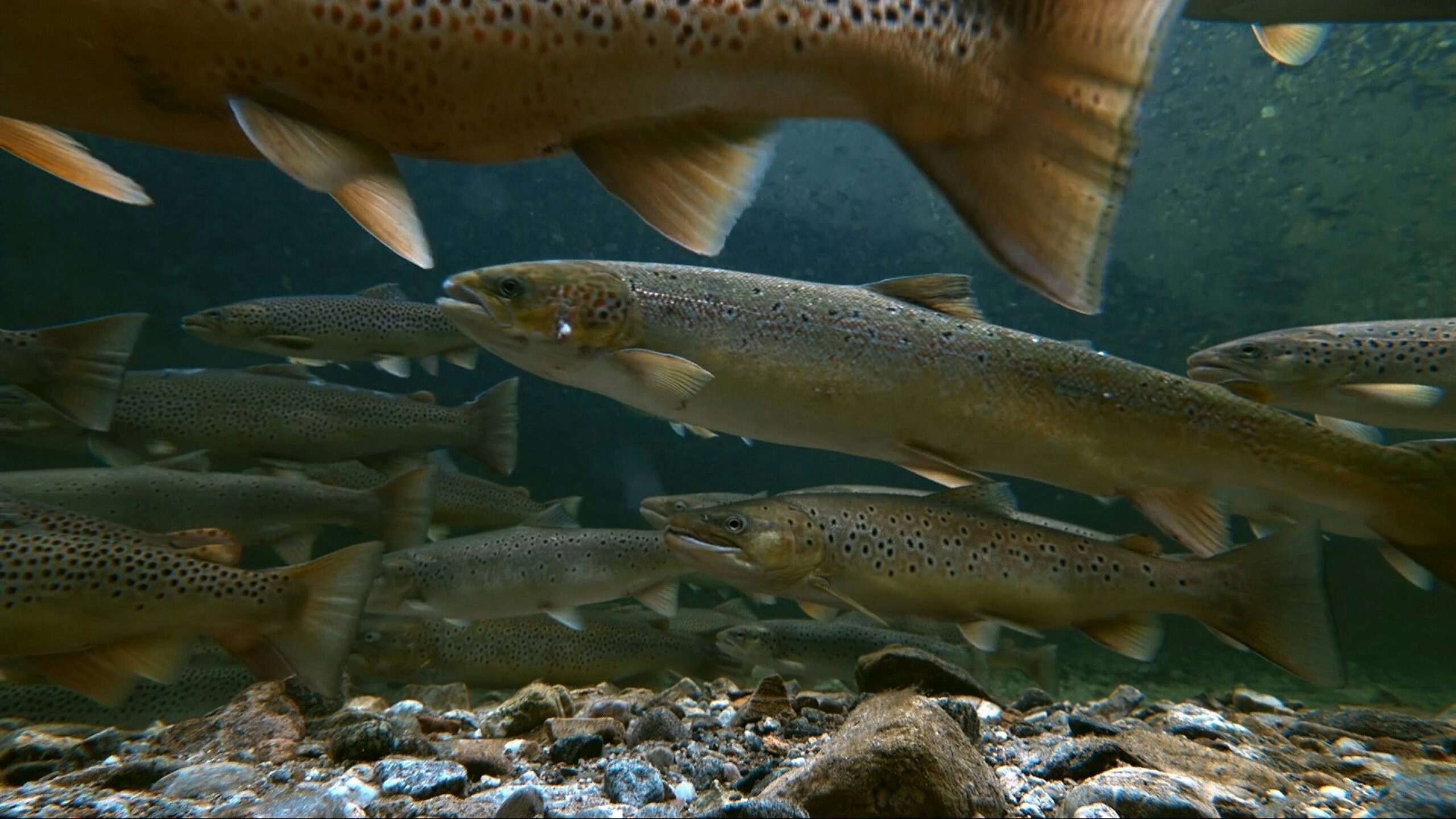
Overall, the vast majority of salmon populations significantly altered their migration timing over the nearly three decade period. Nearly all populations had advanced their return time as waters increased in temperature as the decades progressed. It was also found that there are, in fact, genes in the Atlantic salmon genome that code for migration timing. This suggests that the Atlantic salmon is altering genetically in order to cope with climate change. This is concerning because if climate change continues to progress, what other changes may occur? What changes will be seen in other species?

CONCLUSION
The Atlantic salmon, an important natural resource in Atlantic Canada, needs to be protected for both its ecological and commercial value. This study allows for a better understanding of how human-induced global warming is affecting this species. Understanding such effects will help conservation efforts as migration patterns change.
Leave a Reply