Author: Tomas Wang
Date: August 26, 2026
Area of Impact:
New Brunswick
Article Information and Location:
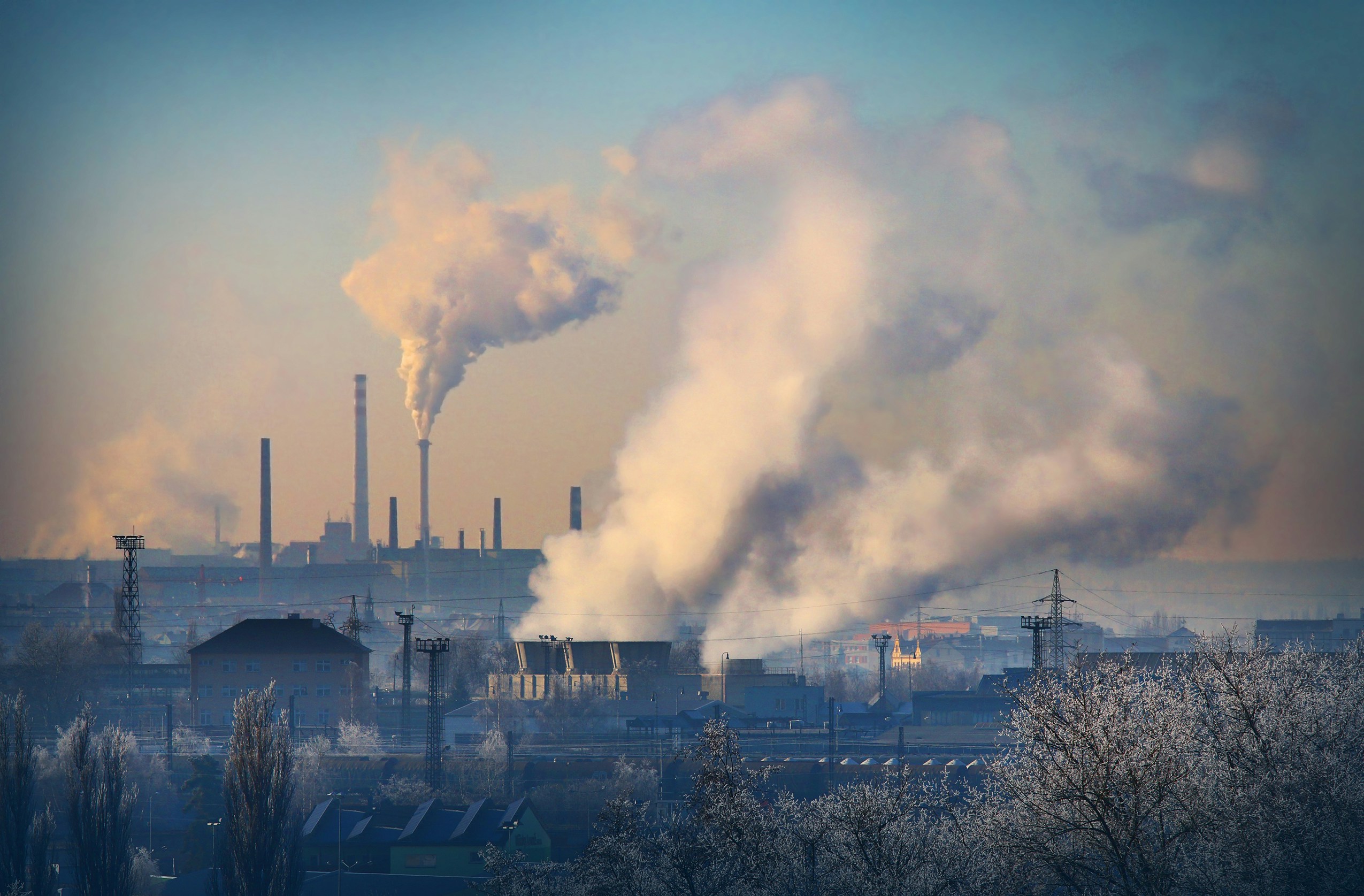
Big N.B. emitters polluted less in 2023, but fell further behind targets
Jacques Poitras, CBC News, Jul 15, 2025
INTRODUCTION
The regulation of corporations is perhaps the greatest challenge to combating climate change; for pollution began with the corporations’ unsustainable endeavors in seeking maximized profit. Currently, the behaviors of corporations still remain a problem. In a perfect world, all corporations will sacrifice profits for the greater good. Such a world does not exist. Realistically, the only way to combat this significant problem is by imposing valid governmental regulations that limit the carbon dioxide emission of corporations. Nevertheless, such a policy is greatly difficult to create. New Brunswick’s Industrial Carbon Price System is a system that is to be contested.
The article Big N.B. emitters polluted less in 2023, but fell further behind targets, details New Brunswick’s Industrial Carbon Price System, discusses the problems it faces, and evaluates its positive aspects. The Industrial Carbon Price System is a federal system implemented not just to New Brunswick. The Conservative Party opposed it, but with Mark Carney elected as Prime Minister, it seems that this policy is here to stay for a few more years at least. Consequently, the validity of this system is very crucial. In New Brunswick, this system mostly targets the fifteen largest industrial polluters. This article only discusses data no later than 2023.

INFORMATION AND SIGNIFICANCE
So what exactly is the Industrial Carbon Price System? It is quite complicated. The government is to decide a standard of carbon dioxide emission per good produced. Notably, the unit of the standard makes it so that if a plant produces more, they are also allowed to pollute more. If an industrial polluter goes under the standard, then they will gain “performance credits”, the amount gained depends on how much they go under. If an industrial polluter goes above the standard, then they will have to use up credits, the amount of credits needed also depends on how much they go over. Aside from directly obtaining “performance credits” from going under, they have two other ways of obtaining credits. One, they can buy “performance credits” from other industrial polluters. Two, they can buy “fund credits” from the government. It is clear that this system offers a lot of flexibility. An industrial polluter who goes over the standard, instead of simply being charged money, they can use up credits from previous years, trade with other corporations, or trade with the government. Every year, the standard becomes stricter, around 2% more every year.
What is the problem? When we look at the data gathered in 2022 and 2023, the good news is that the overall emission of carbon dioxide decreased. The emission was still above the standard, but professionals say that it is fine to go over the standard for now. However, what’s not fine is the fact that the gap between the emission and the standard is widening. In simpler terms, the decrease in emission is slower than the narrowing of the standard. This is shown by data. In 2023, the industrial polluter bought 13 times more “fund credits” compared to 2022 and traded 18 times more “performance credits” compared to 2022. This is bad, because it means that the decrease in carbon dioxide emission may never reach the standard. However, there is also hope, because the fact that the corporation is trading the credits, as shown by the data above, shows that the system is working. Professionals suggested that “The fact that facilities are trading, the fact that facilities are obtaining those credits, suggests to me that they think those credits have value, and they’re worth having.” A working and trusted system is perhaps just as important as hitting the standard.
Some argued the provincial government could do more. The government is not currently providing the individual emissions standards of each industrial polluter, which means the public has no way of telling which industrial polluters are falling short in progress. The government argues that this is “sensitive commercial information”, but in the European Union, such information is fully transparent. The government has also not yet followed up with certain promises, such as Premier Susan Holt’s promise of making the system more robust in her campaign. The revenue generated from the “fund credits” is also meant to be used toward decreasing emission of carbon dioxide; the government has yet to release a list of such projects.

The importance of this system to New Brunswick can hardly be doubted. As previously mentioned, this system is here to stay for a few more years. If the system works out, however, it may become permanent. Consequently, it is important for residents of New Brunswick to become familiar with the system. If the system is to succeed, it may effectively help reverse climate change. Its success may also inspire other systems. Furthermore, this system is an economic system as much as it is environmental. As a result, this system may bring prospects, opportunities, instability, or even devastation to the economy of New Brunswick.
CONCLUSION
The data discussed in this article is years outdated, so the current functioning of the Industrial Carbon Price System is still largely unknown. With hope, this system will work out great and help greatly reduce the emission of carbon dioxide in the region. Nevertheless, it is up to us to make sure further actions are done toward combating climate change, whether this system fails or succeeds. If you work in polluting industries, try to produce ethically. If you work in government, help build new policies. If you work in research, help develop better ways to fight climate change. Although it is important to be aware of climate change, it is equally important to take action. And you can take action, no matter who you are and where you are.
Leave a Reply