
Author: Reeju Francis Leonard Gomes
Date: July 28, 2026

Article Title:
Extreme sea levels, coastal flooding and climate change with a focus on Atlantic Canada
Article Affiliation:
Department of Oceanography, Dalhousie University, Halifax, NS, Canada
Article Citation:
Thompson, K. R., Bernier, N. B., & Chan, P. (2009). Extreme sea levels, coastal flooding and climate change with a focus on Atlantic Canada. Natural hazards, 51, 139-150.
INTRODUCTION
One of the most common climate changes observed is the increased intensity and frequency of storms and other natural disasters. According to the study, coastal flooding is a big problem in Atlantic Canada and many other parts of the world. Intense storms and hurricanes are common phenomena on Canada’s Atlantic coast, and such natural disasters provoke major flooding. Adding a rising sea level makes the situation worse. The global mean sea level has been rising and is projected to accelerate. Therefore, understanding these impacts would be crucial in adapting to climate change and mitigating them. A significant part of adapting to climate change would be the ability to predict natural disasters and take appropriate actions.
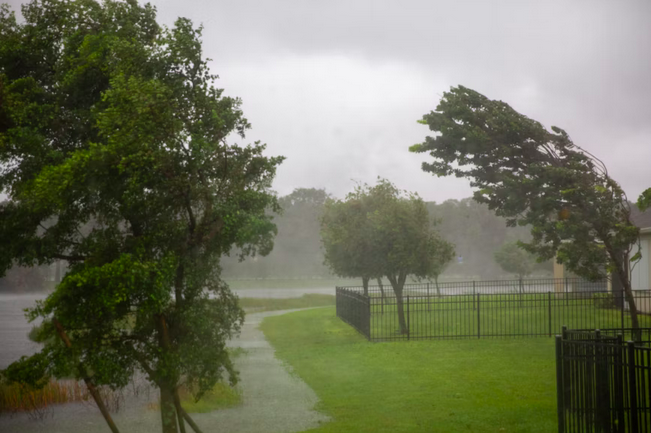
The study analyzed three methods to predict extreme sea levels. The first is called “Classical Extremal Analysis,” which estimates the probability of extreme events by fitting statistical models. The second is called “Tide-Surge Decomposition,” which uses a few years of data to determine and predict flooding risks. The final one is called the “Dynamic Surge Model,” which uses a physics-based method in computer simulations to model storm surges. The different approaches were analyzed, and the advantages and disadvantages of using these models were discussed.
RESULTS AND DISCUSSION
The research found that the advantage of using the classical approach is that it is very reliable, but it unfortunately requires long data records of at least 30 years, which is rare. The statistical methods also have limitations in predicting how flooding risks might change in the future because these models rely heavily on past data, which may not capture new patterns. The tide-surge decomposition method works well with shorter data records and is useful for estimating flood risks in areas with dominant tides. This method, similar in spirit to the Joint Probability Method (JPM), can estimate return levels from just a few years of hourly sea level data, making it useful for locations with shorter records. This method does not allow for analyzing changes in atmospheric forcing fields, such as changes in storm tracks. Like classical extremal analysis, it is limited in its ability to predict the effects of climate change, though it does allow for some simple sensitivity tests.
The dynamic model can predict return periods for locations without sea level observations. It also allows for projections of return periods under various climate change scenarios involving changes in storm frequency, severity, and tracks. The dynamically based models can generate maps highlighting the spatial variability of return levels and identify flood “hot spots,” which cannot be done with statistical methods. The models can estimate the effect of uncertainty on global sea level rise, vertical crustal movement, and atmospheric forcing. One disadvantage is that it does not directly incorporate some factors that influence extreme sea levels. The model may also require high computation costs to run.

The importance and significance of this study lie in understanding flooding risks in Atlantic Canada. Rising sea levels and stronger storms threaten both lives and properties. Knowing these risks and the ability to predict both the extent of damage and when it will come will help communities prepare better. While currently there are models which can predict such climate catastrophes, reliable models are essential. Therefore, this study is crucial for coastal residents, policymakers, government bodies, other stakeholders and researchers to reduce risks and save lives.
CONCLUSION
Climate change is a global issue, and each region faces its own unique problems because of it. Coastal flooding is becoming a bigger problem in Atlantic Canada. Therefore, the need to predict such impacts of climate change is very high. The authors preferred the dynamic model the most as it gave accurate predictions of extreme sea levels. The model would have to be integrated into planning and safety to ensure that sea levels rise and stronger storms, which increase risks for communities and do not cause future damage.
Leave a Reply