Author: Miranda Jacques
Date: December 5, 2025
Article Title:
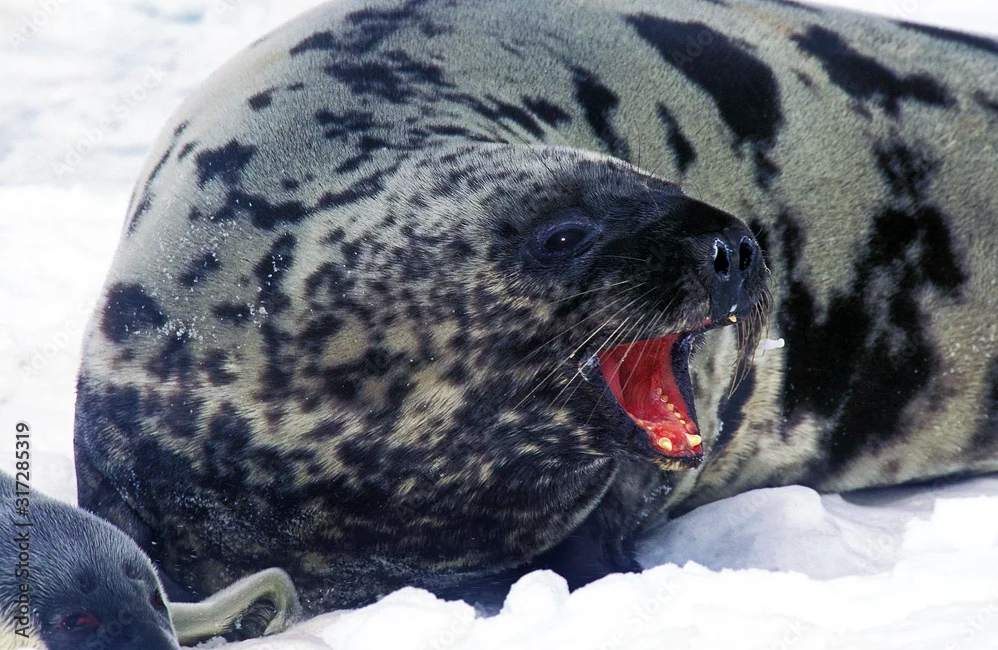
Foraging habits of Northwest Atlantic hooded seals over the past 30 years: Future habitat suitability under global warming
Article Affiliation:
Northwest Atlantic Fisheries Centre, Fisheries and Oceans Canada, St. John’s, Newfoundland and Labrador, Canada
Article Citation:
Vacquié‐Garcia, J., Spitz, J., Hammill, M., Stenson, G. B., Kovacs, K. M., Lydersen, C., & Jeanniard du Dot, T. (2024). Foraging habits of Northwest Atlantic hooded seals over the past 30 years: Future habitat suitability under global warming. Global Change Biology, 30(3), e17186.
INTRODUCTION
The article focuses on the Arctic, a region profoundly affected by global warming, particularly in terms of rising ocean and air temperatures and shrinking sea ice. These changes have significant ecological impacts, especially on marine mammals like hooded seals that rely on ice-associated ecosystems for survival. Research into how these species are adapting is vital for understanding broader environmental impacts and guiding future conservation efforts.
The research sought to determine how hooded seals in the Northwest Atlantic are adjusting their foraging habits over the past 30 years in response to climate change and predicted future habitat changes. This study is crucial as it fills gaps in understanding long-term ecological shifts for Arctic marine mammals, given the lack of extensive historical data. While the researchers did not explicitly state a hypothesis, they explored whether seals’ foraging patterns would change as environmental conditions shifted. Previous studies focused more on short-term behavior; this study extends the analysis by utilizing long-term data.
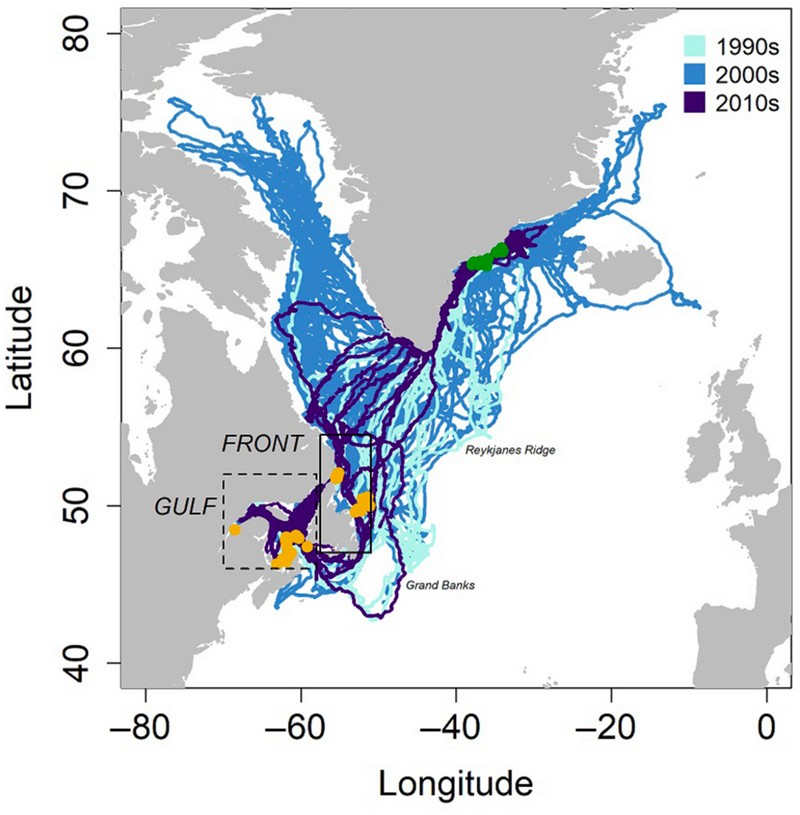
Researchers tracked 92 hooded seals over three decades (1992–2019) using bio-telemetry, analyzing their movements during breeding and molting seasons in the Gulf of St. Lawrence and Newfoundland (Front). A Bayesian switching state-space model was used to estimate foraging behavior based on geographic data, distinguishing between foraging and transit activities.
Taken from Climate Kids
RESULTS AND DISCUSSION
Despite changes in isotopic signatures that hint at possible prey changes, hooded seals continued targeting similar oceanographic conditions over the decades. However, they migrated northwards to find these conditions, particularly the Gulf seals, which preferred colder waters, while Front seals foraged in warmer areas. Future warming is expected to further push foraging regions northward, with Front seals predicted to adapt more resiliently. This study highlights how climate change is altering foraging behaviors and suggests increasing competition and predation risks.
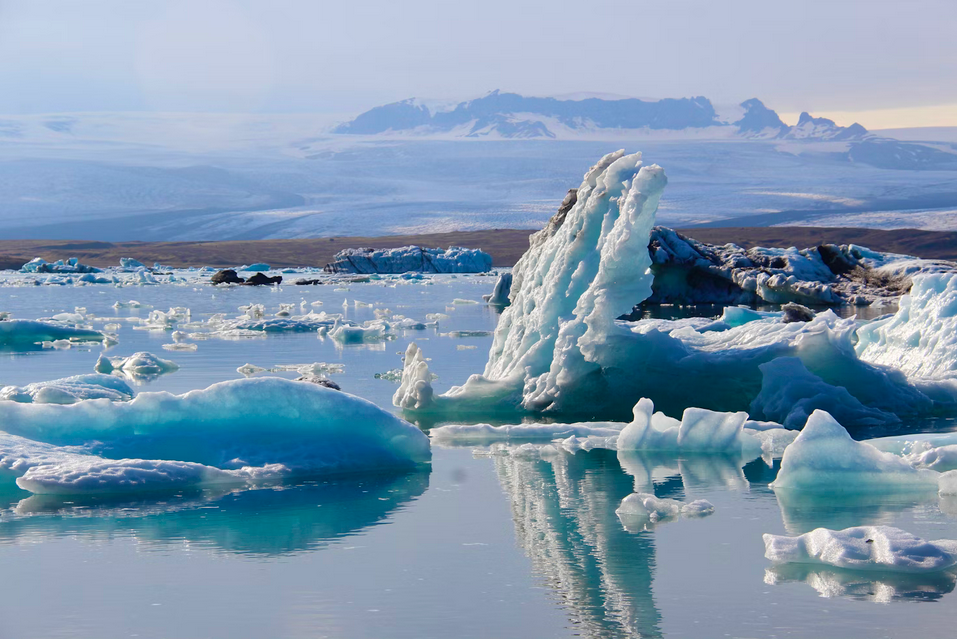
The study is significant as it provides insights into how climate change is affecting Arctic ecosystems, especially hooded seals. Understanding these changes is essential for effective ecosystem management and conservation strategies. It underscores the importance of long-term data to track the subtle but impactful ecological shifts happening in response to global warming. For regions like Atlantic Canada, where many of these seals are found, such research is vital for preserving local biodiversity and maintaining ecological balance.
CONCLUSION
This research demonstrates that hooded seals are adapting to a rapidly changing environment by shifting their foraging habits northward. While this adaptation may help in the short term, long-term consequences include increased competition and predation risks. Further research is necessary to fully understand how climate change will impact Arctic marine mammals in the coming decades.
Leave a Reply